
Iranian Agates: A Treasure of Colors and Nature’s Patterns
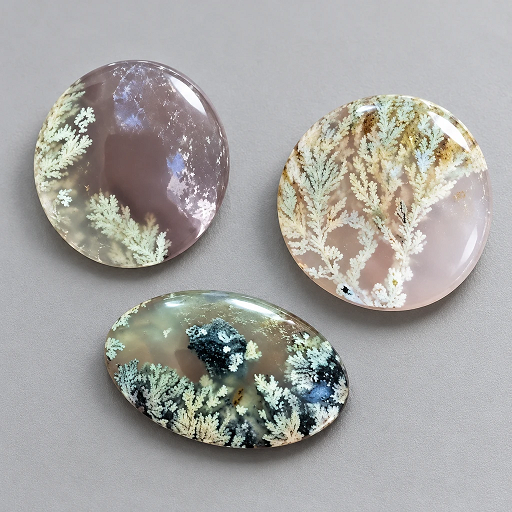
Iranian agate is a type of colored, semi-precious chalcedony that has long held a special place in Iran’s history, culture, and art. With its diverse Iranian agate mines in provinces such as South Khorasan, Razavi Khorasan, Qom, Isfahan, East Azerbaijan, and Semnan, Iran is considered one of the main producers of this stone in the world. Iranian agate is famous for its bright colors and varied types and forms an important part of the country’s semi-precious stone exports.
Geologically, Iranian agate is mainly formed in volcanic units and pyroclastic rocks (tuffs) as veins and veinlets. The minerals that make up this Iranian agate are mainly cryptocrystalline quartz, chalcedony, and jasper. The varied colors of Iranian agate are caused by the presence of different coloring elements; chromium and nickel cause green, copper causes blue, and iron and manganese cause red, orange, and black.
Types of Iranian Agates:
Iranian agate generally falls into two main categories: dendritic agates, which have vein-like and tree-like patterns, and solid-colored agates, which are found in a wide range of colors.
Spring Dendritic Agate (Ferdows)
Spring dendritic agate is one of the best-known and most popular types of Iranian agate, extracted from mines in the Ferdows region of South Khorasan Province. The name “shajar” means tree, and the reason for this naming is the presence of natural veins and patterns inside the stone that look like branches and trees.
A prominent feature of spring dendritic agate is the presence of white, bright dendrites against a transparent or semi-transparent background. This Iranian agate is found in a diverse range of colors, including white, brown, and multicolored. Seven-color spring dendritic agate is also extracted from Ferdows mines, displaying a combination of several different colors in a single gemstone. To clearly see the landscape inside this Iranian agate, sufficient light is needed so that the white dendrites appear beautifully.
In terms of quality, top-grade spring dendritic agate from Ferdows has high transparency and delicate, eye-catching veins, making it an ideal choice for making rings, plaques, and pendants.
Autumn Dendritic Agate (Seh Qaleh)
Autumn dendritic agate from Seh Qaleh is another masterpiece of Iran’s nature and one of the most important Iranian agates of the Sarayan region in South Khorasan. This Iranian agate was nationally registered in the geographical indication list in 1403 (2024).
The unique feature of autumn agate is the presence of natural landscapes and patterns inside the stone that resemble an autumn scene. These patterns, with warm colors of orange, brown, gold, and red against a light or transparent background, appear as if a miniature painting of autumn is depicted in the heart of the Iranian agate. Some specimens of this Iranian agate have double-sided patterns, meaning that different landscapes can be seen on both sides of the gemstone.
Autumn dendritic agate from Seh Qaleh is also known in global markets, and this Iranian agate is recognized in almost all countries. This Iranian agate is usually processed with hand-cutting and cabochon polishing to preserve its natural beauty.
Lilac Agate (Purple/Pink)
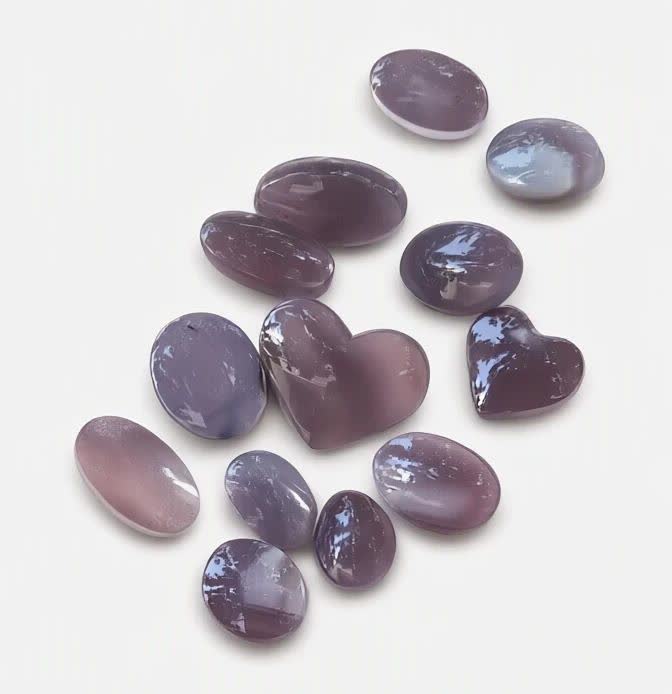
Lilac agate is one of the most beautiful and rare types of Iranian agate and has a special following because of its soft pink to purple color. This Iranian agate is extracted from mines in Khorasan and Kermanshah and is offered completely natural and without treatment.
The lilac color of this Iranian agate is caused by the presence of manganese and copper in the stone’s structure. Lilac agate displays a beautiful color when light reflects and passes through it and is usually found in a water-clear and transparent form.
In terms of properties, lilac agate is known as a stone for increasing peace of mind, reducing anxiety, balancing the chakras, and enhancing creativity and self-confidence.
In traditional beliefs, lilac agate has also been attributed to strengthening memory, reducing nervous tension, and increasing physical energy.
Green Agate
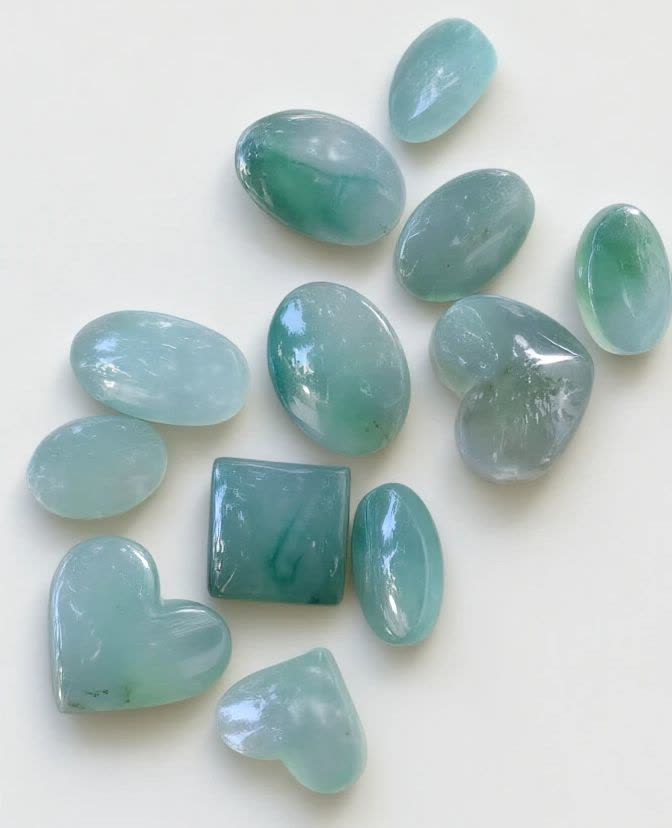
Khorasan green agate is a gem with Iranian authenticity and a symbol of tranquility and nature. This Iranian agate, extracted from the blessed mines of Khorasan, is highly popular among collectors and gemstone enthusiasts because of its vibrant green color, mature temperament, and unique natural brilliance.
The green color of this Iranian agate is caused by the presence of chromium and nickel in the stone’s composition. Green agate is found in a diverse range of colors, from light green to dark emerald green, and is usually offered as a mineral stone without treatment.
Scientific studies have shown that Iranian agates from the Kasrab and Bahmarz regions in southeast Sarbisheh (South Khorasan) have green, blue, red, purple, orange, white, and black colors. Their specific gravity is between 2.57 and 2.62, their refractive index is between 1.52 and 1.56, and they have good polishability. These Iranian agates are semi-transparent to opaque and show no fluorescence or pleochroism.
Yellow Agate
Khorasan yellow agate is one of the most authentic, popular, and sought-after Iranian agates in Iranian culture and history, known for its warm, radiant, and pleasant color. Iranian agates extracted from Khorasan mines are always at the forefront of choices for gemstone enthusiasts and collectors because of their high mineral authenticity, dense texture, and special spiritual value.
The yellow color of this Iranian agate is caused by the presence of yttrium and thallium, and the abundance of these elements in yellow agates has been reported to be higher than in other samples. Yellow agate has a hardness of 7 on the Mohs scale, which gives it very high resistance to scratches and makes it an ideal and durable choice for long-term use in all kinds of jewelry.
In Iranian culture, yellow agate has a warm and moist temperament and is known as suitable for increasing income and prospering business. This Iranian agate is also introduced as a protector of humans against calamities and accidents and as a cleanser of the body’s aura from negative energies.
Brown Agate
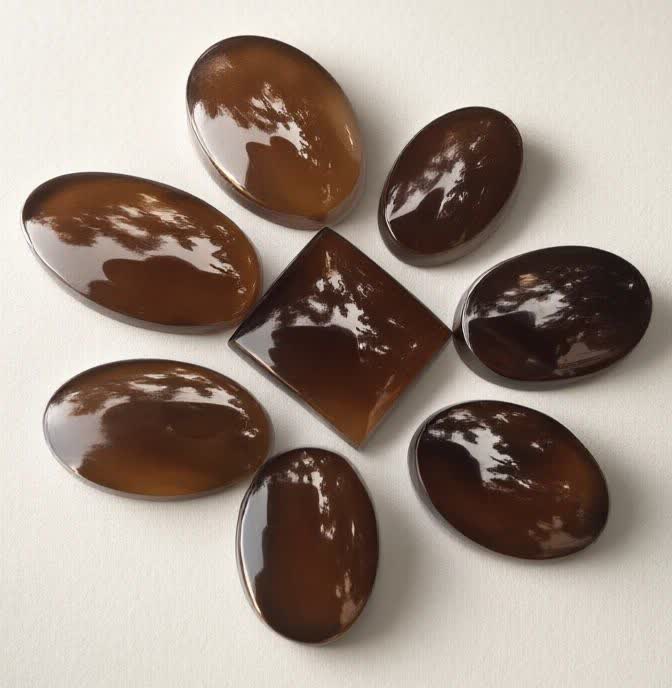
Brown or chocolate agate is one of the most energetic and beneficial types of Iranian agate and is extracted from Khorasan mines. This Iranian agate is usually processed with cabochon cutting and excellent polishing and has very beautiful and eye-catching veins.
Brown agate is found in a diverse range of colors, from light brown to dark chocolate brown. The specific gravity of this Iranian agate is about 2.63 to 2.67, and its hardness is 7 on the Mohs scale. This Iranian agate is usually semi-transparent to transparent and is widely used in jewelry making and gem cutting.
Brown agate is known as a stone for balancing and harmonizing the Root Chakra (Muladhara) and is recommended for those born in Esfand and Shahrivar. This Iranian agate has high energy and is considered beneficial for improving negative emotions and overcoming them.
Red Agate (Carnelian)
Red agate or carnelian is one of the best-known types of Iranian agate in Iran and the world. Khorasan red agate is an authentic stone with a color that comes from the heart of Iran’s soil and symbolizes power, tranquility, and authenticity.
The red color of this Iranian agate is caused by the presence of iron oxide, and the abundance of this element in red agates has been reported to be higher than in other samples. Scientific studies have shown that the best temperature for artificially coloring red and orange agates is about 500 degrees Celsius. However, natural Khorasan agates do not need color treatment and naturally have a beautiful red color.
Red agate has a special place in Islamic and Iranian culture. Wearing an agate ring is considered a recommended act, and it is said that the Prophet of Islam (PBUH) wore a silver ring with an agate stone. In traditional beliefs, red agate is known as a talisman and protector of humans against calamities and accidents.
It has a warm and moist temperament and is considered beneficial for improving behavioral disorders, detoxifying the body, and strengthening the nervous system.
Key Tips for Buying Iranian Agate
When buying Iranian agate, paying attention to a few points can help you make a better choice:
1. Stone Authenticity: Natural and mineral Iranian agates have concentric banding and a fibrous texture, which indicate the gradual deposition of silica over several stages. The presence of these bandings is one of the signs of the authenticity of Iranian agate.
2. Artificial Dyeing: Some red and orange agates may be artificially dyed. Natural Khorasan agates do not need this process, and their color is natural.
3. Cutting and Processing: High-quality Iranian agates are usually processed with hand-cutting and cabochon polishing to preserve their natural beauty.
4. Polishability: Iranian agates generally have good polishability and, after polishing, acquire a beautiful mirror-like luster.
Iranian agates, with their unique diversity of color and pattern, are a treasure of nature’s art that has held a special place in the culture and art of this land for centuries. From spring dendritic agate from Ferdows to autumn agate from Seh Qaleh, from emerald green agate to Khorasan red agate, each tells a story of the geological history and culture of Iran and is worth keeping as jewelry and in collections. Iranian agate is not only a precious stone but also part of the cultural and natural identity of this land.
